It begins with a genealogy. Forty-two generations of Jewish names, tracing a bloodline from Abraham through David to a carpenter in Nazareth. No other Gospel opens this way. No other Gospel could. This is a story written for people who know the Scriptures, who have memorized the prophets, who have been waiting — for centuries — for a King.
And yet this most Jewish of all the Gospels ends with the most breathtaking command in the New Testament: "Go therefore and make disciples of all nations." The Son of David turns out to be the Savior of the world. The King of Israel issues a mandate to the entire earth.
That paradox — covenant insider, global mission — is the engine that drives everything. Between the genealogy and the Great Commission, Jesus lays out a systematic blueprint for how His people are to live, think, worship, and carry His message to the ends of the earth.
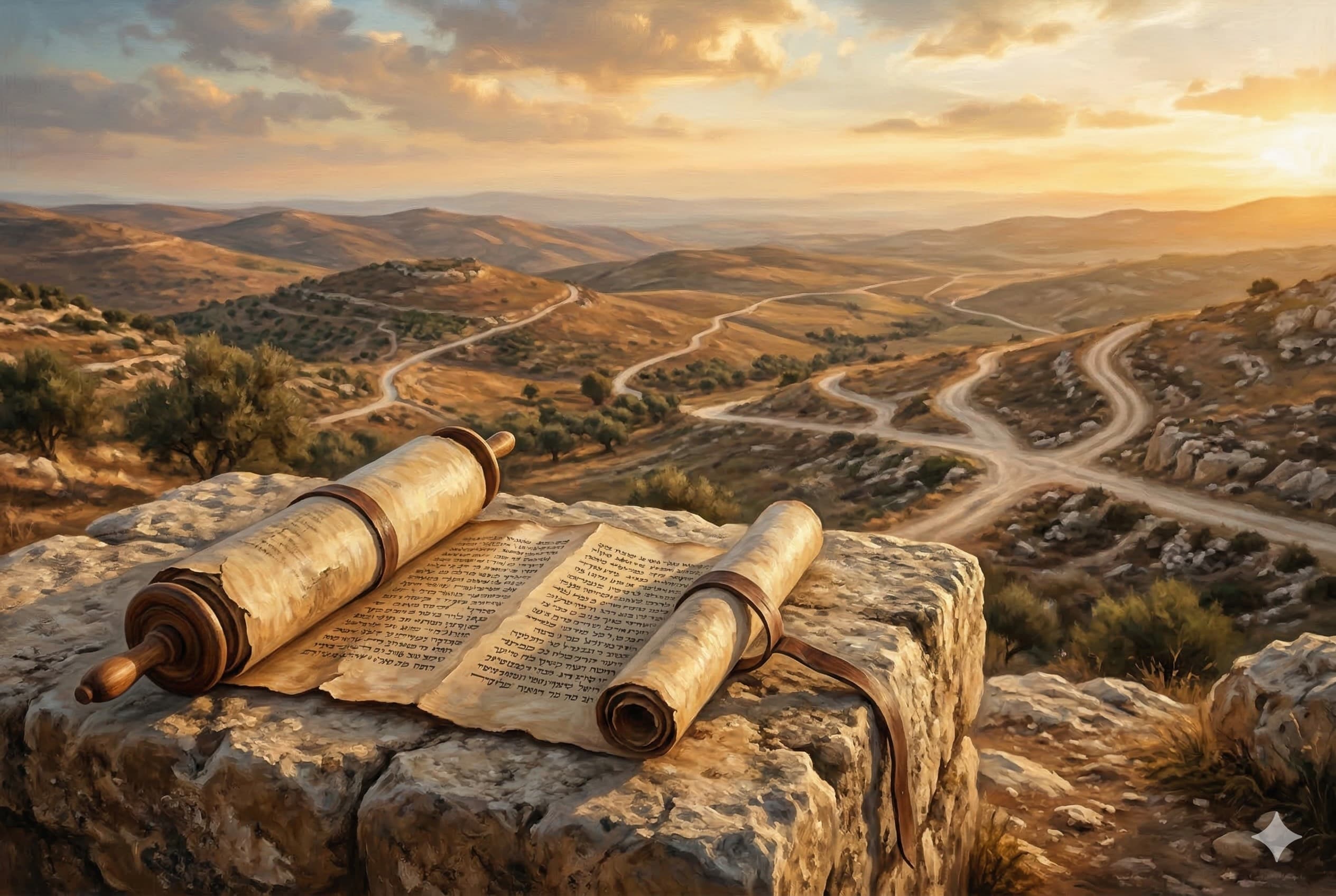
The Bridge Between the Testaments
Open your Bible to the page between Malachi and Matthew, and you are crossing four hundred years of silence. No prophet had spoken. Israel had endured exile, foreign occupation, and the crushing weight of Rome. The question hanging over every faithful Jew was simple and devastating: Has God forgotten His covenant?
The answer is the opening line: "The book of the genealogy of Jesus Christ, the son of David, the son of Abraham." Two titles. Two covenants. One fulfillment.
"Son of David" addresses Israel's royal hope — God promised a King from David's line who would reign forever. "Son of Abraham" reaches further back, to Genesis 12, where God told Abraham that through his offspring all the families of the earth would be blessed. From the very first verse, this King belongs to Israel and to the world.
Everything that happened to Jesus — His birth in Bethlehem, His family's flight to Egypt, His ministry in Galilee — was the precise fulfillment of centuries of divine promise. The repeated phrase "This was to fulfill what was spoken by the prophet" is not a casual footnote. It is a thesis statement: God had not been silent. He had been working.
Three types of fulfillment converge in Jesus: direct prophecy met by a literal event (the birth in Bethlehem), typological fulfillment where Jesus perfects a pattern from Israel's history (called out of Egypt like Israel, but succeeding where Israel failed), and analogical fulfillment where a present sorrow mirrors an ancient grief (Rachel weeping for her children). Together, these demonstrate that Jesus is not an interruption of the Old Testament story — He is its climax.
The Man Behind the Pen
The man who preserved this testimony was once despised by the very community he wrote for. Matthew — also known as Levi — was a tax collector, a Jew who had sold his services to Rome. In the eyes of his neighbors, he was a traitor.
Yet it was precisely this background that equipped him. Tax collectors were trained in record-keeping, legal precision, and organizational systems. Matthew brought a scribe's reverence for the Law and an accountant's eye for structure to the task of presenting Israel's Messiah. He likely wrote in the late 60s AD, probably from Antioch in Syria, for Jewish Christians navigating an increasingly painful separation from the broader Jewish community.
Unlike Mark, who pauses to explain Jewish customs for Gentile readers, Matthew writes for insiders. He dives straight into Sabbath disputes, ritual purity, and Pharisaic interpretation. He uses the Jewish circumlocution "Kingdom of Heaven" where the other Gospels say "Kingdom of God" — a small detail that reveals volumes about his audience's reverence for the divine name.
The New Moses
If you read this Gospel carefully, a stunning pattern emerges. This Gospel is structured around five great blocks of Jesus' teaching — five discourses — each concluded by a variation of the phrase "And when Jesus finished these sayings." This is not accidental. It is a deliberate echo of the five books of Moses.
Jesus is the New Moses. Just as Moses ascended Sinai to receive the Law from God, Jesus ascends the mount to proclaim something greater — from His own authority. But He does not abolish the Law. He completes it, revealing the heart-level righteousness it was always pointing toward.
The five discourses form a complete instruction manual for the King's people:
Discourse 1: The Ethics of the Kingdom (Chapters 5–7). The Sermon on the Mount is the manifesto. It opens with the Beatitudes — a portrait of the Kingdom citizen's character — and moves into six "Antitheses" where Jesus says, "You have heard it said... but I say to you." The sin behind murder is anger. The sin behind adultery is lust. The standard is not external compliance but internal transformation. At the center stands the Lord's Prayer — not merely a model but the believer's lifeline, reminding us that our primary identity is as children of a Father who knows what we need before we ask.
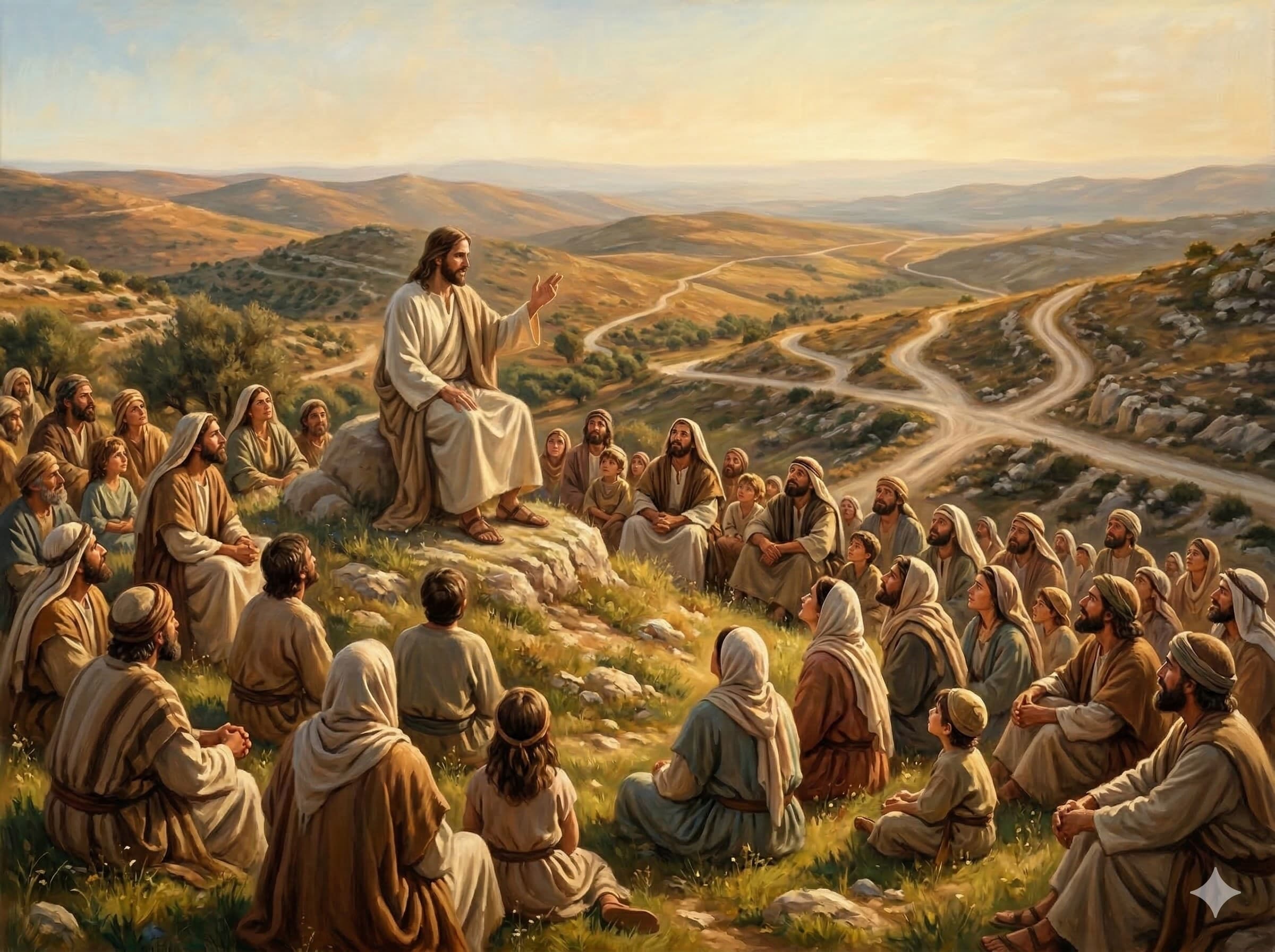
Discourse 2: The Mission of the Kingdom (Chapter 10). Jesus commissions the Twelve, delegating His authority and sending them to the lost sheep of Israel. He does not hide the cost: they will face persecution, betrayal, and hatred. But the King who sends them also sustains them.
Discourse 3: The Mysteries of the Kingdom (Chapter 13). A turning point. When the Pharisees attributed Jesus' power to Beelzebub, Jesus responded with a series of parables — the sower, the wheat and tares, the mustard seed, the pearl of great price. These reveal the Kingdom's hidden, paradoxical nature: it starts small, it grows amid opposition, and its full harvest lies in the future.
Discourse 4: Life Within the Kingdom Community (Chapter 18). This is the discourse for the church. Jesus addresses humility, the care of "little ones," the process of church discipline aimed at restoration, and the radical necessity of forgiveness — not seven times, but seventy times seven. This is the community manual for people learning to live under the King's authority together.
Discourse 5: The Climax and Future of the Kingdom (Chapters 23–25). The tone shifts. Jesus pronounces woes on religious hypocrisy, warns of the temple's destruction, and delivers the Olivet Discourse — parables of readiness, faithfulness, and final judgment. The wise and foolish virgins. The talents. The sheep and the goats. The Kingdom is coming in fullness, and the King will judge.
Between these teaching blocks, narrative sections (healings, controversies, confrontations) demonstrate in action what the discourses teach in words. The Gospel even places structural "bookends" around the first discourse: Matthew 4:23 and 9:35 use nearly identical language ("teaching... preaching... healing") to frame the Sermon on the Mount and the healing narratives as a unified display of the King's authority in word and deed.
Immanuel: The Bookends of Presence
Woven through everything is a thread that holds it all together: the promise of presence.
In chapter 1, the angel declares that the child will be called "Immanuel" — God with us. In the final verse of the Gospel, the risen Jesus promises His disciples, "I am with you always, to the end of the age." Between those bookends, we see what God's presence looks like: a King who teaches with absolute authority, who forgives sins, who receives worship, and who promises that wherever two or three are gathered in His name, He is there.
This is not a distant monarch issuing decrees from a throne room. This is a King who walks among His people — demanding everything, yet never leaving.
The King's Community: Peter and the Church
This is the only Gospel that uses the word "church" — ekklesia. That is not incidental. Jesus is deeply concerned with the community He is building.
The pivotal moment comes in chapter 16. After Peter confesses Jesus as "the Christ, the Son of the living God," Jesus responds with a foundational promise: "On this rock I will build my church, and the gates of hell shall not prevail against it." This passage has generated centuries of debate, but what is unmistakable is Jesus' intent: He is building a visible, ordered community — and He is entrusting its stewardship to flawed, redeemed people like Peter.
The Fourth Discourse (chapter 18) then provides the community's operating manual: be humble like children, pursue wandering sheep, confront sin with the goal of restoration, and forgive without limit. This is the Kingdom's culture — not a set of rules imposed from outside, but a way of life flowing from the King's own character.
Greater Righteousness
At the heart of Jesus' teaching is a phrase that redefines everything: "Unless your righteousness exceeds that of the scribes and Pharisees, you will never enter the kingdom of heaven" (5:20).
This is not a call to try harder at rule-keeping. It is a call to a completely different kind of righteousness — one that begins in the heart and works outward. The Pharisees tithed their spices but neglected justice and mercy. They cleaned the outside of the cup while the inside was full of greed. Jesus demands what we might call "whole-person righteousness" — where giving, prayer, and fasting are done for the Father's eyes alone, where treasures are stored in heaven rather than on earth, and where love extends even to enemies.
This is the standard the King sets for His Kingdom. It is impossibly high — which is precisely the point. It drives us not to self-effort but to dependence on the King Himself.
The Global Mandate
And then comes the ending that changes everything.
The King who was born in Bethlehem, who taught on the mountain, who was crucified outside Jerusalem — this King stands risen on a mountain in Galilee and speaks:
"All authority in heaven and on earth has been given to me. Go therefore and make disciples of all nations, baptizing them in the name of the Father and of the Son and of the Holy Spirit, teaching them to observe all that I have commanded you. And behold, I am with you always, to the end of the age."
The Great Commission is built on four pillars: authority ("all authority"), scope ("all nations"), content ("all that I have commanded"), and presence ("I am with you always"). The central command is to make disciples — a word that implies conversion, transformation, and a whole new way of life. Conversion changes the person, baptism identifies them with the King, and teaching forms them into His likeness. The Sermon on the Mount, the parables of the Kingdom, the community ethic of forgiveness, the warnings of judgment — all of it becomes the curriculum for those whose lives have already been changed by the gospel.
The "Son of Abraham" promise from the opening verse finds its fulfillment here. God told Abraham that through his offspring all families of the earth would be blessed. Now the risen Son of Abraham sends His followers to make that blessing a reality.
What This Gospel Asks of Us
This Gospel confronts us on two fronts.
First, it asks whether our righteousness is real. Not whether we look the part — attend the services, say the right words, keep the visible rules — but whether the transformation has reached our hearts. The King sees the inside of the cup. He knows whether our generosity is worship or performance, whether our prayers are offered to the Father or staged for the crowd.
Second, it asks whether we have heard the mandate. The gospel calls people to repentance and faith — and then the five discourses shape the lives of those who respond. The Great Commission sends us out to make disciples of every nation: to proclaim the King, and then to teach those who follow Him everything He commanded. This Gospel does not end with a period. It ends with a command and a promise: go to the world, and I will be with you.
The most Jewish Gospel turns out to be the most global — because the God of Abraham always intended to bless every family on earth. And the King who demands greater righteousness is also Immanuel, the God who stays.